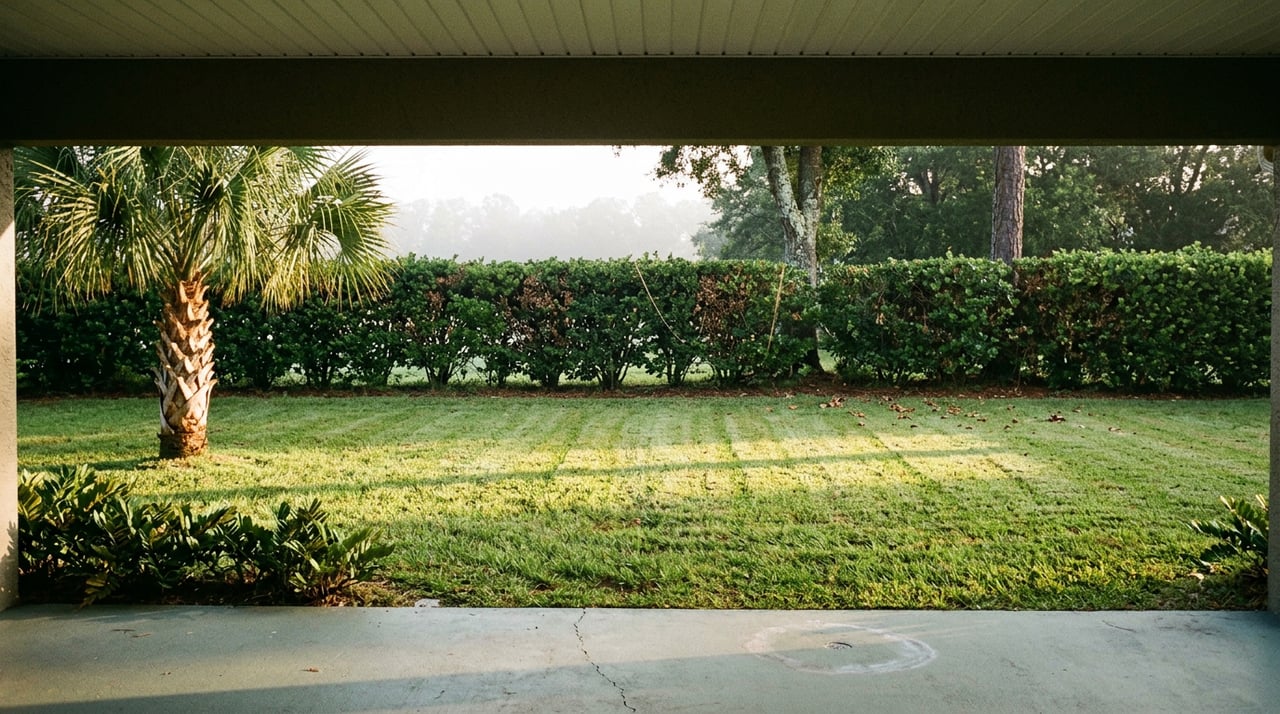
How many times have you driven past that small gravel lot on Prosperity Farms Road, just south of the neighborhood, without ever pulling in?
If you've driven past without stopping, Frenchman's Forest Natural Area is worth getting to know as more than a place you'd take out-of-town guests. The trails are good, and the preserve isn't really a separate destination at all. According to Palm Beach County's own management plan for the site, the Frenchman's Forest tract is bordered directly to the north by the Frenchmen's Landing residential community and to the west by Frenchman's Reserve and its golf course. The fence line at the back of the neighborhood isn't a property boundary that happens to sit near a park. It's the edge of a 158-acre county preserve that residents already share a border with.
That changes how you should think about visiting it. And right now, in early August, there's a second reason to pay attention: the preserve is heading into its best two months of the year for anyone who walks with a pair of binoculars, and almost nothing about the visit changes to get there. Same free admission, same sunrise-to-sunset hours, same small lot. Only what you'll see is different.
Your Fence Line Is Also a County Boundary
The natural area itself covers what Palm Beach County lists as 158 acres, though regional hiking guides put the figure closer to 172. The county's own natural area profile and its formal management plan don't reconcile the two numbers, and it doesn't much matter which one is technically correct. Either way, this is not a pocket park. It's a contiguous, protected buffer of pine flatwoods, cypress swamp, and mangrove-lined tidal creek sitting directly against the northern edge of Frenchmen's Landing, land the county management plan describes as bordered to the south by a canal, a church property, and the Prosperity Pines neighborhood, and to the west by Frenchman's Reserve.
That's worth sitting with for a second. The quiet you notice at the back of the property isn't a landscaping choice. It's protected acreage that can't be developed, sitting between this neighborhood and the next one over.
Four Trails That Aren't Four Separate Walks
Here's where most write-ups about this preserve get lazy. They list four trails like they're four unrelated options you choose between in the parking lot. They're not. They're one connected system, and walking them in sequence is the only way the preserve actually makes sense on your first visit.
Start at the kiosk. Every hiker begins on the Blazing Star Nature Trail, a paved, wheelchair-accessible path that runs under a canopy of hardwoods for its first two tenths of a mile, with benches along the way. At the T intersection, a left turn takes you onto a short boardwalk ending at a covered observation deck over Lake Worth Creek, a mangrove-lined pool where wading birds and softshell turtles gather. It's the easiest payoff in the preserve and most visitors never get past this point.
Backtrack across the boardwalk and continue straight instead, and the path gains a little elevation as it transitions into scrub. At roughly a quarter mile you reach the main junction for the natural-surface trails: the Saw Palmetto Hiking Trail, a sandy 1.3-mile loop marked in yellow through slash pine and sabal palm; the Staggerbush Hiking Trail, marked in red, which runs east and meets a 500-foot elevated boardwalk through old-growth cypress swamp; and the Archie's Creek Hiking Trail, marked in blue, which loops back through scrub habitat to reconnect with the system.
None of the trailheads are labeled by name on the ground. The markers are color-coded posts, not signs, which is exactly the kind of detail that trips up first-time visitors and doesn't show up in a listing description. Know the colors before you go and the whole system takes maybe an hour. Guess at it and you'll spend half that time backtracking.
What Changes in the Next Few Weeks
Right now, in early August, the preserve is coasting on its resident birds. Great Horned Owls and Pileated Woodpeckers are around year-round, but the species count that makes this spot worth a special trip hasn't shown up yet.
That builds through the fall. The Florida Birding Trail lists Frenchman's Forest as a stop specifically because of its migratory songbird traffic, with more than 25 wood-warbler species recorded on site over the years, including Chestnut-sided, Kentucky, Swainson's, and Yellow-throated Warblers, along with rarer sightings like Black-faced Grassquit and Western Spindalis. Audubon Everglades runs organized walks here during migration season, and a past October outing tallied 30 species in a single two-hour visit, including a Nashville Warbler, a Pileated Woodpecker, and a Summer Tanager, all working the same habitat mosaic that's sitting quiet right now.
The mechanism here isn't complicated. This preserve's mix of pine flatwoods, hardwood hammock, and tidal swamp gives migrating birds several habitat types to work in a compact space, which is exactly why organized bird walks here have historically landed in the fall rather than mid-summer. You don't need to wait for a guided walk or a special event. The same trail you'd walk today gets noticeably more interesting once migration season takes hold, at no extra cost and no change in access.
Three Things Nobody Mentions Until You're There
- No pets, anywhere on site. Not on the paved trail, not on the boardwalk. If you're used to bringing the dog on neighborhood walks, this one catches people off guard.
- No restrooms and no water fountains. The nearest restroom, per Audubon Everglades' own trip notes, is about a mile away at the 7-Eleven on PGA Boulevard. Plan accordingly, especially in August heat.
- The lot holds about ten cars. There's a bike rack nearby, but if you're driving over on a weekend morning during migration season, don't assume you'll find a spot on the first try.
None of this is a criticism of the preserve. It's a small, county-managed natural area, not a resort amenity, and that's part of the appeal. But a ten-car lot with no restrooms is a very different experience than the vague "nature trail nearby" language you'll find in most neighborhood write-ups, and it's the kind of detail that actually helps you plan the visit instead of just knowing the visit exists.
Why the Buffer Matters Even If You Never Think About It
Most days, you won't think about the fact that a protected 158-acre tract sits against the edge of the neighborhood. That's fine. The value of a buffer like this isn't that you use it every week, it's that it's permanently there, managed by Palm Beach County's Department of Environmental Resources Management rather than sitting as a future development parcel. It's part of what keeps this stretch of the Prosperity Farms corridor, from Frenchmen's Landing through Frenchman's Reserve, feeling lower-density than its proximity to PGA Boulevard's retail corridor would otherwise suggest.
Walk it this week if the heat allows, or wait for fall and bring binoculars. Either way, it's worth remembering that the quiet stretch of trees at the back of the property isn't just scenery. It's acreage with a name, a management plan, and a season that's about to get a lot more active.
If you're weighing what a neighborhood like Frenchmen's Landing or nearby Frenchman's Reserve actually offers day to day, beyond the listing photos, Chris Moody spends a lot of time walking these corridors himself. Reach out anytime. Let's Achieve Your Real Estate Goals.